This is a short post, but it calls for a huge reality check.
Most people skip contemplating this — because it feels too far away, or too uncomfortable to think about.
But if you are planning a 25-year retirement, there is a very real chance that you or your spouse will need some form of assisted living or frail care before the end of it.
This series was written specifically for you — whether you’re five years from retirement or already enjoying your years of freedom. It is practical, plain-spoken, and South African. No jargon and no advice. Just plain information you want to know for your own well-being.
This is part 7 about: Frail Care, Assisted Living & Long-Term Care
Please read the DISCLAIMER from the link near the bottom of the page.
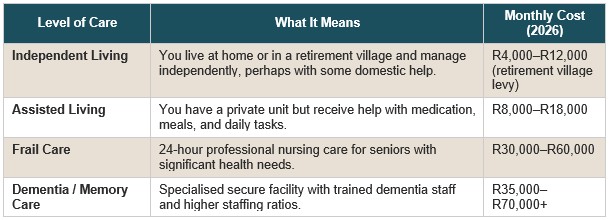
The costs are staggering — far more than most retirement plans account for.
The Four Levels of Care — and Their Costs
⚠ WATCH OUT: Most medical aid schemes do not cover long-term residential care. Some comprehensive plans cover 14–90 days of frail care per year — but that is a fraction of what you would need if you require permanent care. The rest comes directly from your savings.
How Families Fund Long-Term Care.
- Living annuity drawdowns — increasing your withdrawal rate to cover care costs. This must be carefully managed to avoid depleting capital too quickly.
- Selling your home — downsizing to a smaller property or moving into a life right in a retirement village can release significant capital.
- Or sell the home and other assets, put the capital on an interest-bearing investment and apply the proceeds together with some capital if necessary to service the monthly costs.
- Life right or entry fee models — many retirement villages charge a lump sum entry fee and reduced monthly levies, which can be cost-effective for the right person.
- SASSA old age grant — at R2,180–R2,320/month (2026 rates), this is accepted at subsidised facilities but will not cover private frail care.
- Family contributions — common in South Africa, but this should be discussed and agreed upon well before the need arises.
The Conversation You Need to Have Now.
The single most important thing you can do today about long-term care is have an honest conversation with your family — your spouse, your children, or whoever would be responsible for decisions about your care.
Discuss your preferences. Would you want to be cared for at home? Are you open to a frail care facility? What are your financial resources? Who will make decisions if you cannot?
Writing these preferences down, and ensuring they are part of your estate planning documents, is an act of love that your family will be deeply grateful for.
Next…
The next post in the series will explain:
The National Health Insurance -NHI-
What It Means for Your Private Medical Cover.
As you will want to know more, all you have to do is to subscribe to this series below.
You may unsubscribe at any given time from future posts.
PS: We are not medical aid brokers or financial advisors and will not try to sell you any medical cover. This series is for informational purposes only.
No spam. No clutter. Just useful information, or:
Click here to stay informed through our spam free WhatsApp Channel.
Added Privacy:
Followers and Admin can’t discover your phone number from this channel.
…One Last Question.
If something happened to you today…
Would your family know what to do tomorrow?
Most families don’t.
Get your own personal simple affairs organiser — so your family never has to guess.