The Retirement Snack Trap:
Why We Fall In, and How to Get Out.
In my post titled ACTION, we looked at how easily snacking creeps into retirement life — the rusk with your coffee, the biscuit with your tea, the snack bowl that appears the moment you sit down with a book. None of it feels excessive in the moment. But add it up over weeks and months, and the retirement snack trap starts to show itself around your waistline, your energy, and your health.
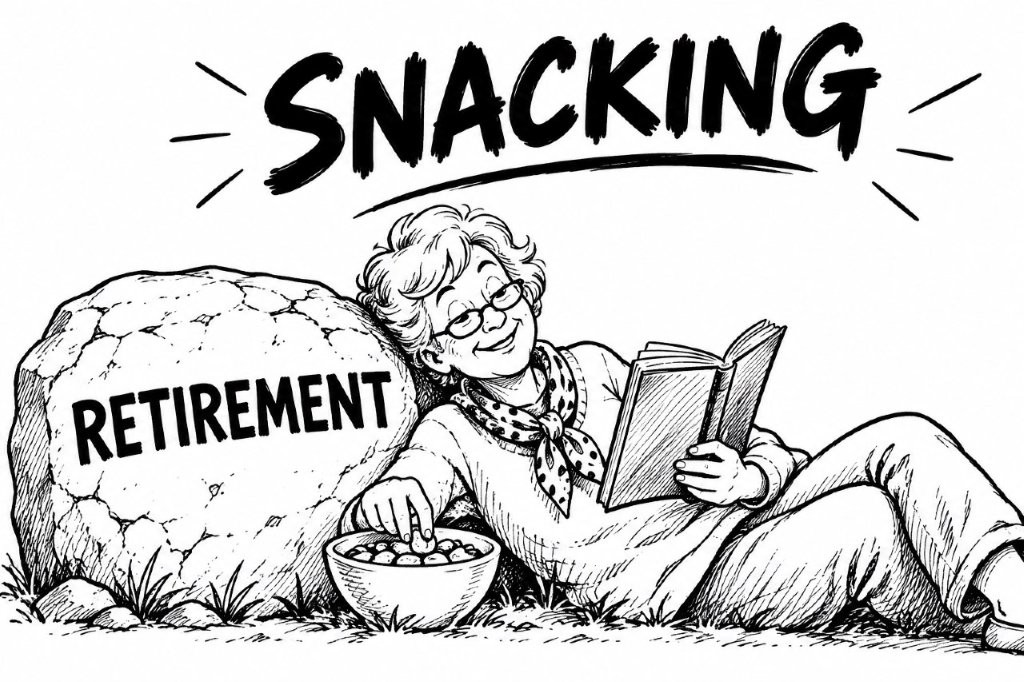
Let’s discuss why this happens, what it’s doing to your body, and — most importantly — how to break free of it.
1. How Retirement Opens the Door to Snacking
Work gave you structure without you even noticing it. Fixed lunch hours. A commute that bookended your day. Meetings that kept your hands busy and your mind elsewhere.
Retirement removes all of that. Suddenly the kitchen is always ten steps away, and free time has a way of filling itself with little rituals — tea, biscuits, whatever’s on TV. Snacking isn’t really about hunger here. It’s about stimulation, comfort, and filling the gaps that structure used to occupy.
2. Why Snacking Becomes So Hard to Resist
Sugary, salty, fatty snacks aren’t just tasty — they trigger a dopamine release in the brain, the same “feel-good” chemical involved in other reward-driven habits. Do this often enough, and your brain builds a habit loop: cue (walking past the cookie jar) → routine (eating) → reward (that little hit of pleasure).
Over time, tolerance builds. The same handful of biscuits gives you less satisfaction than it once did, so you reach for a bit more. And when snacking is standing in for something emotional — boredom, loneliness, the quiet of an empty afternoon — it becomes even harder to walk past that jar without stopping.
3. What Snacking Is Actually Doing to Your Body
This is the part most people don’t think about — but it matters.
Insulin spikes. Refined carbs and sugary snacks cause a rapid rise in blood glucose. Your pancreas responds by releasing a surge of insulin to bring it back down. The trouble is, if you’re snacking throughout the day, your body is almost never given a break from this cycle. Over time, cells can become less responsive to insulin — a condition known as insulin resistance, and a well-known precursor to type 2 diabetes.
Your digestive system. Constant grazing doesn’t give your gut the rest it needs between meals. It can blunt your natural hunger and fullness signals (the hormones ghrelin and leptin), leaving you less able to tell when you’re actually full. Add in the low-fibre, heavily processed nature of many snack foods, and bloating and sluggish digestion often follow.
Fat around the liver. When you eat more sugar and refined carbs than your body needs in the moment, the excess gets converted to fat — some of which is stored in the liver. This is how non-alcoholic fatty liver disease (NAFLD) develops, a condition that’s becoming increasingly common and is often silent until it’s fairly advanced. It’s closely tied to insulin resistance, and the two conditions tend to feed each other, making the cycle harder to break the longer it continues.
None of this is meant to alarm you — it’s simply what’s happening quietly in the background every time the snack cycle repeats.
4. Why Healthy Eating Routines Matter More Than Ever in Retirement
Regular, structured mealtimes help keep blood sugar stable and reduce the urge to graze between meals. And here’s the part that catches people off guard: metabolism naturally slows with age, right around the time many of us retire. That means routine isn’t about restriction — it’s protection. It supports steady energy, better mood, and more restful sleep, not just your weight.
Read more about:
What Should Be on Your Plate.
5. Breaking Snacking’s Hold on You
- Know your trigger. Is it boredom, habit, emotion, or real hunger? Naming it is the first step to managing it.
- Replace the ritual, not just the food. A short walk, a hobby, or a cup of herbal tea can fill the same slot a biscuit used to.
- Change your environment. Keep tempting snacks out of easy reach — or out of the house — and healthier options where you’ll actually see them. Follow through with this while shopping. Simply buy less snacks or refrain completely from buying snacks.
- Eat to stay satisfied. Meals with enough protein and fibre keep you fuller for longer, so the 3pm craving has less room to show up.
- Use the 10-minute pause. When the urge hits, wait ten minutes before acting on it. Often, it passes on its own.
6. Staying Snack-Free for Good
Old habits love a gap, so don’t leave one. Build a loose daily rhythm — set times for meals and tea, even without a job to anchor them. Allow yourself one or two planned, healthy snacks so you never feel deprived. Stay active and socially engaged, so eating isn’t filling a gap that connection or activity should. And check in with yourself now and then — a quick, honest look at your habits is often enough to catch old patterns before they quietly resettle.
The Takeaway
Retirement should be enjoyed, not quietly undermined by habits that crept in when no one was watching. Breaking free of the retirement snack trap isn’t about deprivation — it’s about noticing the small daily choices, understanding what’s driving them, and gently taking back control. Your waistline, your energy levels, and your liver will thank you for it.
…One Last Question.
If something happened to you today…
Would your family know what to do tomorrow?
Most families don’t.